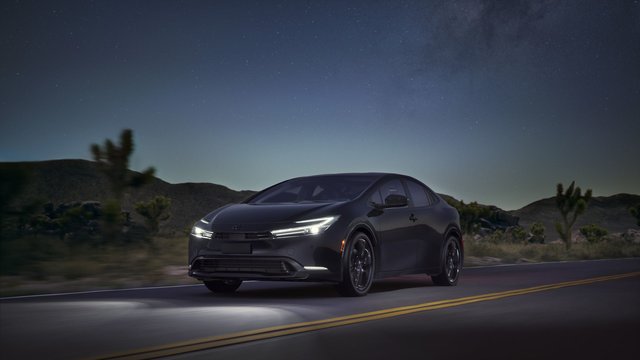
Driving through rural Nova Scotia after sunset brings its own set of challenges. From winding coastal highways to unlit backroads, visibility drops dramatically once the sun goes down. For drivers in Yarmouth and surrounding communities, Toyota Safety Sense offers two technologies specifically designed to address these conditions: Automatic High Beams and Pre-Collision System with Pedestrian Detection.
These aren't just convenience features—they're active safety systems that help you see more clearly and respond faster when visibility is limited. Understanding how they work, and their limitations, helps you make the most of them during your evening commutes and late-night drives.
How Automatic High Beams Work
Automatic High Beams (AHB) use a forward-facing camera mounted near your rearview mirror to monitor the road ahead. The system activates at speeds above approximately 34 km/h and automatically toggles between high and low beams based on detected light sources.
When the camera identifies oncoming vehicle headlights, taillights from vehicles ahead, or sufficient ambient lighting from streetlights, it switches to low beams. Once those light sources clear, it returns to high beams to maximize your forward visibility.
The system reduces the manual effort of constantly switching between beam settings on rural roads with intermittent traffic. However, it requires active driver oversight—factors like dirty windshields, variable weather, lighting conditions, and hilly terrain can limit effectiveness and require manual override.
Key Operational Details:
- Activates automatically above 34 km/h when headlight switch is in AUTO position
- Detects vehicles, streetlights, and other light sources to determine beam setting
- May not switch immediately when vehicles cut in front or approach from far lanes
- House lights, traffic signals, and illuminated signs can trigger beam changes
Pedestrian Detection in Low-Light Conditions
The Pre-Collision System with Pedestrian Detection uses both a camera and millimetre-wave radar to monitor the road ahead. It's designed to detect pedestrians and bicyclists, determine if impact is imminent, and provide audio/visual warnings followed by automatic emergency braking if the driver doesn't respond.
System effectiveness depends heavily on visibility conditions. The documentation explicitly notes limited nighttime and low-visibility performance. Detection accuracy decreases significantly when:
- Pedestrians blend into dark surroundings (night, tunnels, dusk)
- Silhouettes are unclear (raincoats, long skirts, oversized clothing)
- Pedestrians are shorter than approximately 1 metre or taller than approximately 2 metres
- Strong light sources (sun, headlights) shine directly into the camera
- Weather conditions reduce contrast (fog, heavy rain, snow)
The system is not a substitute for attentive driving. On unlit rural roads, it provides an additional layer of detection, but drivers remain solely responsible for monitoring their surroundings and maintaining safe speeds for conditions.
At a Glance: Toyota Safety Sense Features for Dark Roads
|
Feature
|
Function
|
Activation Speed
|
Key Limitation
|
|
Automatic High Beams
|
Toggles between high/low beams based on detected light sources
|
Above 34 km/h
|
Dirty windshield, weather, hilly terrain reduce effectiveness
|
|
Pre-Collision System with Pedestrian Detection
|
Detects pedestrians/bicyclists, provides warnings, applies emergency braking if needed
|
Active at all speeds
|
Limited nighttime and low-visibility performance
|
Real-World Performance Considerations
Both systems have operational boundaries that matter on Nova Scotia's rural roads. Automatic High Beams may not change to low beams immediately when vehicles are far away, have dim lights, or approach from lanes multiple positions over. Timing can also shift based on road gradient, curves, and surface conditions.
Pedestrian Detection faces additional challenges in rural environments. The system may not detect pedestrians who are:
- Running or moving at high speed
- Suddenly appearing from behind vehicles or buildings
- Lying down, squatting, or bending forward
- Pushing strollers, wheelchairs, or bicycles
- Wearing clothing that obscures their silhouette
Weather compounds these limitations. Heavy rain, snow, fog, and mist all reduce camera and radar effectiveness. If water droplets, snow, or ice accumulate on the camera lens, detection accuracy drops further.
Complementary Safety Technologies
Toyota Safety Sense includes additional features that support safer driving in low-visibility conditions:
Dynamic Radar Cruise Control maintains preset speed and following distance using radar and camera technology. Enhanced vehicle detection allows the system to recognize multiple preceding vehicles and vehicles in adjacent lanes, providing smoother speed adjustments during lane changes.
Lane Tracing Assist works when Dynamic Radar Cruise Control is enabled and detectable lane markings are present. It uses road lines and preceding vehicles to help keep your vehicle centred in its lane. The system also includes an Emergency Driving Stop System designed to bring the vehicle to a stop if the driver becomes non-responsive.
Road Sign Assist detects speed limit signs, stop signs, Do Not Enter signs, yield signs, and certain warning signs, displaying them on the Multi-Information Display. This helps maintain awareness of regulatory signage that may be harder to spot in darkness.
System Maintenance and Driver Responsibility
Both Automatic High Beams and Pedestrian Detection require clear sensor lenses to function properly. Regular cleaning of the windshield area around the forward camera and front radar sensor is essential, especially during winter months when salt spray and road grime accumulate quickly.
The systems will not operate properly if:
- Sensors are misaligned or damaged from impact
- Accessories obstruct camera or radar (non-genuine fog lights, bumper protectors)
- Windshield has cracks or damage in camera field of view
- Tire pressure is low or tires are excessively worn
- Vehicle height has been modified
These are driver-assist technologies, not autonomous systems. They supplement—but never replace—attentive driving, appropriate speed for conditions, and proper use of headlights.
Driving Safely on Nova Scotia's Dark Rural Roads
Technology helps, but safe rural driving after dark still requires driver judgment. Reduce speed on unfamiliar roads, watch for wildlife crossing, and be prepared to manually override Automatic High Beams when approaching oncoming traffic on hills or curves the system may not detect vehicles immediately.
If you're driving in fog, heavy rain, or snow, understand that Pedestrian Detection effectiveness drops significantly. Increase following distance, reduce speed, and remain alert for pedestrians and cyclists who may be harder for both you and the system to detect.
Toyota Safety Sense provides meaningful assistance on dark rural roads, but it works best when drivers understand both its capabilities and limitations. These systems support safe driving practices—not replace them.
Experience Toyota Safety Sense at Tusket Toyota
If you're navigating Nova Scotia's rural roads regularly, understanding how these safety technologies work in real-world conditions matters. Our team at Tusket Toyota in Yarmouth can walk you through how Automatic High Beams and Pedestrian Detection function in the specific driving environments you encounter most often. Schedule a test drive to experience these systems firsthand and ask any questions about their operation and limitations.