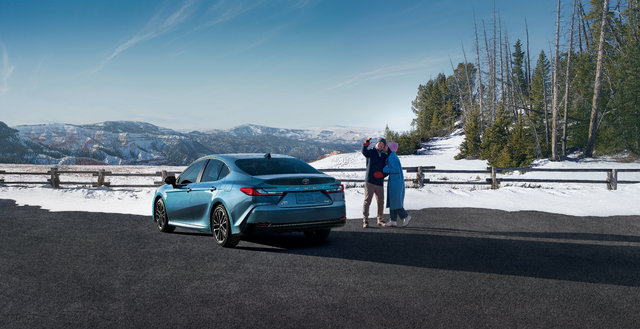
When shopping for a sedan, it is easy to assume that choosing between two Toyotas comes down to deciding which one is bigger or which one costs less. But the difference between the Toyota Corolla and Toyota Camry goes beyond their dimensions.
Both are designed to make everyday driving enjoyable and practical, but they approach that goal in different ways. The Corolla is a compact sedan that emphasizes efficiency, manageable size, and everyday value. The Camry offers a larger cabin, a more spacious feel, and additional power while maintaining a strong focus on fuel efficiency.
For 2026, there is another important distinction: the Corolla is available with gasoline or hybrid powertrains, while every Canadian-market Camry comes with a hybrid powertrain. That gives shoppers another factor to consider when deciding which sedan suits them best.
So, how do you choose between them? The answer starts with understanding how you drive, what you value, and what you want from your next vehicle.
Two Sedans With Different Priorities
The Toyota Corolla has earned its place as a popular choice for drivers who want dependable everyday transportation without needing a larger vehicle. Its compact dimensions make it well suited to commuting, running errands, navigating parking lots, and travelling around town.
The Toyota Camry takes a different approach. As a midsize sedan, it offers more room to stretch out and a larger overall footprint. It can be especially appealing to drivers who regularly travel longer distances, carry adult passengers, or simply prefer the feel of a larger car.
Neither approach is automatically better. A smaller vehicle can be easier to live with in certain situations, while a larger sedan can make other parts of daily driving more comfortable.
The goal is to find the balance that works for you.
Size Matters, But Not in the Way You Might Expect
One of the most noticeable differences between the Corolla and Camry is their size.
The Corolla's compact design can be an advantage for drivers who frequently park in busy areas or travel on narrower streets. Its size can also make it feel less intimidating for someone moving into a sedan for the first time or downsizing from a larger vehicle.
The Camry provides a roomier environment, particularly for passengers who appreciate additional space. If your back seat regularly accommodates friends, family members, or older children, the extra room may become more valuable over time.
Think about your regular routine rather than an occasional situation. If most of your driving involves commuting alone or travelling with one passenger, the Corolla may provide everything you need. If you frequently have several people in the vehicle, the Camry deserves a closer look.
It is also worth sitting in both vehicles. Published dimensions can tell you a lot, but they cannot fully explain how a seat feels, how easy it is to get comfortable, or how much room you personally want around you.
Gasoline or Hybrid: Another Important Difference
For 2026, Toyota offers Canadian Corolla buyers a choice between gasoline and hybrid models. The Camry, meanwhile, is offered exclusively as a hybrid.
The gasoline Corolla uses a 2.0-litre four-cylinder engine producing 169 horsepower. Corolla Hybrid models use a 1.8-litre four-cylinder hybrid system producing 138 system horsepower, with fuel consumption rated as low as 4.4 L/100 km combined for the Corolla Hybrid LE. Actual fuel consumption varies with driving conditions and configuration.
The Camry's 2.5-litre hybrid system produces 225 horsepower in front-wheel-drive SE form, while available all-wheel-drive configurations can produce up to 232 horsepower. This gives the Camry a different balance of power and efficiency, with more horsepower available than either Corolla powertrain.
What does this mean in everyday driving?
The gasoline Corolla may appeal to drivers who prefer a conventional gasoline powertrain. The Corolla Hybrid is worth considering if reducing fuel consumption is a major priority, especially if you spend a lot of time commuting or driving in traffic.
The Camry offers a hybrid system across its entire lineup, so you do not have to choose between a gasoline-only and hybrid version. Instead, the decision becomes whether its larger size, additional power, and overall driving experience suit your needs.
If fuel economy is one of your biggest considerations, compare the official ratings for the specific trims you are considering. The result can depend on the exact configuration, including whether the vehicle has all-wheel drive.
How Do They Feel on the Road?
A vehicle's specifications are useful, but they do not tell you everything about the driving experience.
The Corolla's compact size and responsive handling make it well suited to everyday trips. Whether you are commuting to work, stopping at the grocery store, or driving through town, it offers a straightforward experience that does not require a large vehicle to accomplish ordinary tasks.
The Camry provides a different feel, with a larger cabin and a more substantial presence on the road. Its additional power may also appeal to drivers who want stronger acceleration when merging onto highways or passing slower traffic.
Both vehicles are designed for daily use, but personal preference plays a significant role here. Some drivers enjoy the nimble feel of a compact sedan, while others prefer the more spacious atmosphere and driving character of a midsize model.
A test drive is the best way to find out which one feels natural to you. Try both on familiar types of roads, paying attention to visibility, steering, seating position, cabin noise, and how comfortable you feel behind the wheel.
Which One Makes More Sense for Your Budget?
The purchase price is an important part of the decision, but it is only one piece of the ownership picture.
The Corolla generally provides a more accessible starting point in the Toyota sedan lineup. For 2026, Canadian pricing starts lower than the Camry's, and the availability of gasoline and hybrid models gives buyers different ways to approach their budget. The Camry's standard hybrid powertrain, additional passenger space, and higher performance come with a higher starting price.
It is also worth considering how you will use the vehicle over several years.
Think about your expected annual kilometres, fuel costs, insurance quotes, maintenance requirements, and the features you want. If you drive long distances regularly, fuel consumption may carry more weight in your decision. If passenger comfort is a daily priority, the Camry's additional space may be worth considering.
The best value is not necessarily the vehicle with the lowest initial price. It is the one that offers the right combination of cost, comfort, practicality, and features for your circumstances.
Features and Trim Levels: How Much Do You Need?
Another advantage of comparing the Corolla and Camry is that both offer different trim levels, allowing buyers to choose how much equipment they want.
The Corolla lineup ranges from practical entry-level models to sportier SE and more extensively equipped XSE versions. Depending on the trim, features can include heated front seats, a heated steering wheel, wireless charging, a power moonroof, upgraded multimedia displays, and premium audio.
The Camry lineup also offers a variety of equipment levels. Depending on the trim, buyers can find features such as larger multimedia displays, upgraded audio, heated and ventilated front seats, additional driver information technology, and more premium interior appointments.
It is important to compare the actual equipment on the trims available to you rather than assuming that every feature is included across the lineup.
Consider which features will genuinely improve your day-to-day experience. Heated seats may be particularly welcome during colder Nova Scotia mornings, while a larger display or upgraded audio system may matter more to someone who spends several hours a day commuting.
You do not need to choose the most extensively equipped version to find the right sedan. Start with the features you will use most often and work from there.
What About Driving in Nova Scotia?
Local driving conditions are worth considering when choosing any vehicle.
If your routine involves commuting, navigating town, and making frequent short trips, the Corolla's compact dimensions may be especially convenient. A Corolla Hybrid could also be worth exploring if fuel efficiency is a priority.
For drivers who regularly travel between communities, spend extended periods on the highway, or carry passengers frequently, the Camry's larger cabin and additional power may be appealing.
Winter driving should also be part of the conversation. The 2026 Corolla Hybrid lineup includes available all-wheel-drive models, and the Camry offers available all-wheel drive as well. These systems can help provide traction when conditions demand it, but they do not replace appropriate winter tires, safe following distances, or adjusting your driving to the weather.
Think about the roads you use most often, the distances you travel, and the conditions you encounter throughout the year. Those details can help you decide which vehicle makes the most sense.
So, Which Toyota Sedan Is Right for You?
The easiest way to decide is to consider your priorities.
The Toyota Corolla may be the better fit if you want a compact sedan, appreciate having a gasoline or hybrid option, and value a vehicle that is easy to manoeuvre during everyday driving.
The Toyota Camry may be the better fit if you prefer a larger cabin, regularly carry passengers, want additional horsepower, and like the idea of having hybrid technology standard across the lineup.
If you are still undecided, write down your three biggest priorities before visiting the dealership. They might be fuel economy, passenger space, comfort, purchase price, or technology. Then compare both vehicles against that list.
Take the time to sit in each one, explore the controls, check the rear-seat space, and drive them back-to-back if possible. You may discover that the differences you thought mattered most are not the ones that influence your decision after all.