Modern vehicles are capable of doing things that would have seemed almost unbelievable just a few decades ago. They can monitor engine performance, detect nearby vehicles, help drivers maintain their lane, assist with parking, and even adjust certain systems based on changing driving conditions.
But how does a vehicle know when something is happening around it? How can it recognize that a tire needs attention, detect an obstacle while reversing, or determine when a driver is drifting out of their lane?
A large part of the answer comes down to sensors.
Today's vehicles rely on an extensive network of sensors that constantly collect information about the vehicle, the road, and its surroundings. While drivers may never see most of these components, they play an important role in how modern vehicles operate.
So why do vehicles need so many sensors, where are they located, and what exactly are they doing?
1. What Is a Vehicle Sensor?
At its simplest, a sensor is a component that detects or measures something and sends that information to another system in the vehicle.
Depending on its purpose, a sensor might measure temperature, pressure, movement, speed, distance, or the position of a particular component.
For example, an engine relies on several sensors to monitor how it is operating. These components collect information that the vehicle's computer uses to help manage engine performance, fuel delivery, and emissions.
Other sensors are designed to monitor the vehicle's surroundings. They can help detect nearby objects, identify lane markings, or measure the distance between your vehicle and another vehicle.
The information collected by these sensors allows different vehicle systems to respond to changing conditions.
In other words, sensors help modern vehicles understand what is happening both inside and outside the cabin.
2. Sensors Under the Hood
Some of the most important sensors in a vehicle are located under the hood.
Modern engines depend on precise measurements to operate properly. Instead of relying on fixed settings, the vehicle's computer uses information from different sensors to make adjustments based on current operating conditions.
For example, an engine uses sensors to monitor air entering the engine, the temperature of the engine coolant, the position of the crankshaft, and the amount of oxygen in the exhaust.
Each measurement serves a different purpose.
The mass airflow sensor helps measure the amount of air entering the engine. Oxygen sensors monitor the exhaust to help the engine management system adjust the air-fuel mixture. Coolant temperature sensors provide information about how warm the engine is operating.
Together, these components help the engine management system make adjustments that support performance, fuel efficiency, and emissions control.
Without this information, modern engines would have a much harder time responding to changing temperatures, driving conditions, and engine demands.
3. Sensors That Help You See What's Around You
Not all vehicle sensors are concerned with what is happening under the hood. Many are designed to help drivers become more aware of their surroundings.
Parking assistance is a good example.
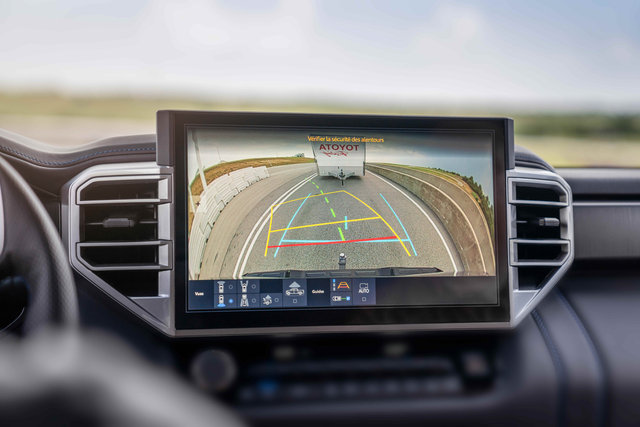
Depending on the Toyota model and equipment package, vehicles may use ultrasonic sensors to detect nearby objects while parking. These sensors can measure the distance between the vehicle and an obstacle, providing an audible warning or visual information to the driver.
Backup cameras also help drivers see what is behind their vehicle, while available systems such as Blind Spot Monitor can provide warnings when another vehicle is detected in an area that may be difficult to see.
Some Toyota models also offer parking assistance technology that can help identify suitable parking spaces or provide additional assistance when manoeuvring.
These systems are especially useful in busy parking lots, tight driveways, and other situations where visibility can be limited.
It is important to remember that these technologies are designed to assist drivers, not replace checking mirrors, looking around the vehicle, and remaining aware of nearby obstacles.
4. How Do Vehicles Recognize Lane Markings and Other Traffic?
Modern driver-assistance technology relies on more than just sensors that measure distance.
Many Toyota vehicles equipped with Toyota Safety Sense use a forward-facing camera, along with radar technology, to help monitor the road ahead.
The camera can identify visual information such as lane markings, while radar can help detect vehicles and measure their distance and relative speed.
This information supports several driver-assistance features.
Lane Departure Alert is designed to help detect when a vehicle begins drifting out of its lane without a signal. Depending on the system, it can provide an alert and may offer steering assistance.
Dynamic Radar Cruise Control uses radar and a camera to help maintain a selected following distance from a vehicle ahead.
Pre-Collision System uses information from the vehicle's detection equipment to help identify certain potential frontal collisions and can provide warnings or braking assistance when conditions are met.
These systems work together to provide additional information and assistance while driving.
They are not designed to make driving decisions for you, but they can help support awareness during everyday trips.
5. Sensors Help Monitor Your Tires
Your tires are the only part of your vehicle that makes direct contact with the road, so keeping them properly inflated is important.
That is where the Tire Pressure Monitoring System, commonly known as TPMS, comes in.
Many modern Toyota vehicles use sensors that monitor tire pressure and alert the driver when one or more tires are significantly underinflated.
Depending on the system, tire pressure information may also be displayed through the vehicle's information screen.
This feature can be especially helpful because tire pressure is not always easy to judge by looking at a tire.
A tire can lose pressure gradually without appearing noticeably flat. A monitoring system provides an additional warning that something may need attention.
However, TPMS is not a replacement for manually checking tire pressure. Drivers should still inspect their tires regularly and make sure they are inflated to the recommended pressure listed on the vehicle's tire information label.
6. Sensors Are Also Found Throughout the Cabin
Sensors are not limited to the engine bay, bumpers, or exterior of the vehicle.
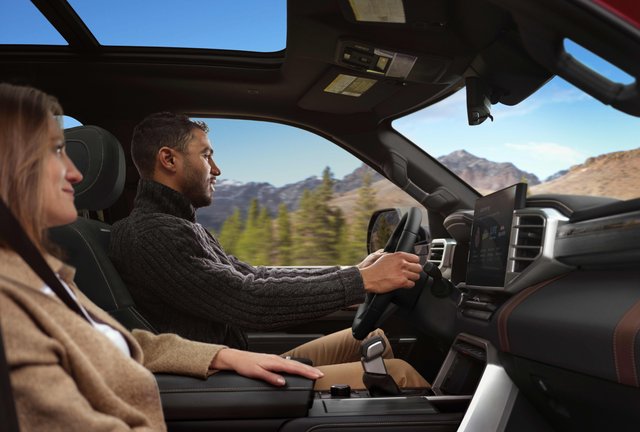
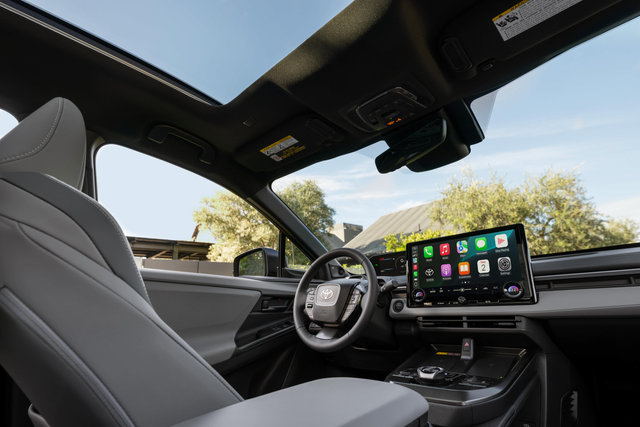
Modern cabins can contain sensors that help operate and monitor different systems.
For example, some vehicles use sensors to monitor cabin temperature and help automatic climate control maintain the selected temperature. Other systems can monitor sunlight entering the cabin and adjust climate control operation accordingly.
Occupant detection systems can also use sensors to help determine whether a passenger is sitting in a particular seat. This information can influence how certain safety systems operate.
Depending on the model, additional sensors may support features such as automatic headlights, rain-sensing wipers, and other convenience technologies.
These are examples of how sensors have become integrated into everyday vehicle operation. Many of the systems drivers use regularly are able to respond to changing conditions without requiring constant adjustments.
7. What Happens When a Sensor Stops Working?
With so many sensors involved in modern vehicle operation, it is reasonable to wonder what happens when one stops working.
In many cases, the vehicle will recognize that a sensor or related system is not operating as expected and display a warning light or message.
For example, a malfunctioning sensor could cause a driver-assistance feature to become temporarily unavailable. A problem with an engine sensor could also trigger the check engine light.
Sometimes, a warning may appear because a sensor is blocked rather than damaged. Snow, ice, mud, or dirt can interfere with certain cameras and detection equipment.
This is particularly relevant during the winter months, when road salt and snow can accumulate around bumpers, cameras, and other exterior components.
If a warning appears, it is important to consult the owner's manual and follow the recommended steps. If the warning remains or a system continues to operate incorrectly, having the vehicle inspected by a qualified technician can help identify the cause.
Modern vehicles are designed to monitor many of their own systems, but they still require proper maintenance and occasional repairs.
8. More Sensors, More Information, Better Support for Drivers
The number of sensors found in modern vehicles reflects just how much automotive technology has evolved.
What was once a relatively simple collection of mechanical and electrical systems has become a connected network of components that constantly communicate with one another.
Sensors help manage engine operation, monitor tire pressure, support parking assistance, detect potential hazards, and provide information about the vehicle's surroundings.
In Toyota vehicles, these technologies contribute to a driving experience that combines everyday practicality with increasingly advanced levels of assistance and convenience.
The next time you start your vehicle, back out of a driveway, or activate cruise control, remember that there is a lot happening behind the scenes.
You may only see a few warning lights, displays, and dashboard controls, but dozens of components could be collecting information and helping different systems work together.